Monday, 12 March 2012

Graduation

Tomorrow I graduate.

And given how abstract the whole thing is at the moment, I almost feel like I'm suddenly going to fade off beautifully from head to toe rather than take part in any kind of ceremony.

Honestly, the whole thing's rather intimidating.  To get to this do (in the middle of London) we need to travel today and stay overnight.  Deb managed to find us an appropaite hotel (appropriate means relatively cheap in these circumstances) and then tomorrow morning we're off so that I can be wheeled in front of someone to recieve a bit of paper.

And yet there is a part of me which thinks these kind of dos are important and something I've not really had much of in the past.

It's a bit like birthday parties (likewise something I've not much experience of) - people gather to celebrate what you've achieved.  Because birthdays are less about a passage of time and more about what you've become or are becoming.

My degree is a funny thing.  Given my inability to work, there's a part of me which thinks of any formal education as a waste of money.  But this is obviously rubbish.  The extreme result of thinking like that is that any poorly kid should be excluded from school for money reasons (something which looks more and more likely given the way that the disabled as being treated in this country).

And yet the degree is one of the very best things I've ever done.  I worked very hard at it, felt that massive rush and excitement as I understood and even expanded upon the ideas of countless academics before me.

And the great thing is that with a classics degree, you're left with knowledge that can lead you through almost any situation.  Even a graduation.

The only problem is, I can't think of anyone at the moment other than Petronius who, when ordered to commit suicide by Nero did so by cutting his wrists.  But then promptly bound them up so that he could spend the evening partying and writing out a list of all Nero's perversions before letting the bandages loose.

So rather than anything quite so drastic, here's my way of getting through graduation.  Photographic proof that I have a brain.

Graduation

Saturday, 10 March 2012

Dan Simmons - Flashback (review)

Although it's sometimes a tricky process, I'll never say that writing a Christmas list is a hardship.  I feel there's something positive about listing dreams, and although there are times when I'm scared to name the big-picture, long-term, life-changing desires, I'm definitely at home to Mr Capitalist-Consumer.

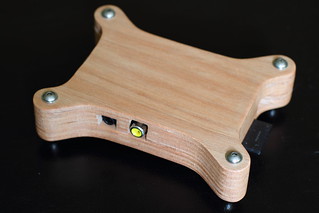
So this year's Christmas list was an interesting mix of toys - from a kit to build your own camera right the way through to Ponyo on dvd(and just in case you're feeling generous - no one got them for me...).  It was a masterpiece of an Amazon wishlist...and being Amazon based (and being mine) it featured a fair number of books.  I ended up with several choice volumes - a work on Disaster Movies as a genre, Terry Pratchett's 'Snuff' and 'Flashback', a novel by Dan Simmons, author of the superb Ilium and Olympos, as well as the Hyperion and Endymion books.  This novel, however, sounded a bit different - still SF, but less far-reaching and potentially less strange.  I looked forward to any book brave enough to name its hero Nick Bottom.  A book about a drug allowing you to relive your past and how that might work in a Private Investigator-type story.  I pictured repeated investigations of memories and the subtleties of experience.  The questioning of reality.  And, this being a Dan Simmons novel, plenty of literary allusions.  And maybe a few literary illusions too.

I am utterly stunned having read it.  And not in a good way.  I almost feel bad writing this, but then having read 550 pages of hate-filled ranting and raving, I need to exorcise the experience by doing a bit of my own!

I had no idea about Dan Simmons' political ideology prior to reading this novel.  I think it's fair to say that none of his ponderings on modern life are a mystery to me now.  Whether it's national health care, Islam or modern architecture, no narrative was brave enough to get in the way of page after page of drivel describing how mad, bad and dangerous they all are.  Honestly at times it felt like sitting alone with an elderly relative, rendered aggressive by poorly chosen medication, listening to their spittle-barbed tirades against the world as they see it.

This was a detective story!  First and foremost it should be about interesting plot twists and a story that keeps you guessing.  And yet I would think that at least half of the book was taken up with unimportant discussions of politics which just left me shaking my head in horror.  In fact, the few errors I found in the story were so glaringly obvious in part because they stood out by not being a political message about Muslims or Socialism.  The 'I'm an evil madman mwahahaha!' speech at the end of the book is followed by the (and I use the word loosely) 'hero' saying that he couldn't help but agree with the gist of the rant.  That just doesn't work!  I know that good villains should be sympathetic.  But there's sympathy and there's...well...there's a scene when a self-proclaimed pacifist fantasises about hanging people from lamp-posts and nuking Muslims!

What's worse, while I've been getting more and more wound up by this book, so it's been eroding much of what I've enjoyed in his previous books.  I can now look back and rather than picking out the good, I end up thinking 'Oh yes, yet another 'nice' woman who is dead, an aggressively strong woman who is alive but not to be messed with, and...well...not many other women at all'.

This is my blog.  I'm allowed to witter on about whatever I like.  Because it's a blog.  If this were a novel, it'd be a pretty poor one.  But not as poor as Flashback.

Thursday, 8 March 2012

Gay Marriage - an ex-choirboy's perspective

As an ex-choirboy I know everything there is to know about marriage.

Honestly, there's nothing that's a mystery to me.  From my point in the pews near the ceiling of the local church, I could look down upon the whole thing in much the same way one may look down on a football match from a (much more comfortable) box seat.  But while the bouncy ball of football fate may be fickle, the game of Wedding is much more easy to read.

Once, I and my be-cassocked brethren sang The Locomotion from our lofty position.  Complete with actions.  That marriage was going to do well.

Once, the bride collapsed into hysterics when asked 'Do you take this man...'.  That marriage...well...what do you think was going to happen?

But the most important thing, by far, was the way the bride and groom looked at one another.  If they looked with true love you knew that the marriage would be successful and joyful (for the most part) no matter how much Australian pop or inappropriate laughter was involved in their lives together.

So as an ex-choirboy who knows everything about marriage, it surprises me that some people think that gay marriage is wrong.  How can any marriage be wrong if it's about love?

But no, says Lord Carey, marriage is actually about these things;

Children and Tradition

OK, call me silly, but surely that means that any couples wanting to get married should first have a fertility test, right?  Only those capable of squeezing out at least five infants in the first ten years of life together should be allowed to marry, right?

Forgive my Classicist-Choirboy thought processes, but Musonius Rufus worked this out many many many many many years ago.  Marriage, he says, is not chiefly about the begetting of brats, because, you know, animals produce offspring without a ceremony and we're perfectly capable of it.  Marriage is about;

"...complete companionship and concern for each other..."

and it is destroyed when one party sets their mind entirely on what is outside of the marriage, rather than the wellbeing of their other half.

Even if it were about children, though, why should we stop infertile couples from marrying?  They could always adopt, right?  And if an infertile heterosexual couple can adopt, surely so can a gay couple?  And arguments against the ability of gay couples of raise children sort of went out of the window when this chap spoke.

So there's tradition.  Cool, I like tradition.  So which tradition do we follow?  Ancient Spartans staged a mock kidnap and shaved a woman's hair before dressing her in military attire.  I can see that going down well in the UK.  Just imagine all the enraged hair-dressers who'd be losing out on income?

Tradition's a funny argument.  For many many years in the UK there was no religious or ceremonial element to marriage and all people had to do was live together and consider themselves to belong to one another.  Traditions change.  And as any ex-choirboy knows, love trumps tradition.

And anyway, how was Kylie traditional, eh?

Then there's the argument that gay people can already become civil partners and that's as good as marriage.  OK, so if we define Lord Carey to no longer by human but just a bipedal life-form, that'll be ok then, right?  I mean it's just the same thing by another name.  He doesn't want to be human.  It's just a word.

Honestly, how anyone can make that argument without rolling their own eyes at themselves is beyond me.  Of course everyone wants to be married.  And of course using a separate terminology is going to make it second class.

Finally there's the argument that this is another of a long line of attacks on Christian values.  As a Christian I guess I should be very worried by gay marriage.  But I'm not.  I'll tell you why.

One of the examples given of previous attacks was the hotel argument.  Now, as a vaguely liberal sort, I should be appalled that someone should want to exclude certain people from their guesthouse.  I'm not, though.  I think that's fine.  What I do believe, though, is that there should be some consistency.

So you think being gay is wrong because it's "written in the bible".  Fine.  Firstly, make it plain and clear that that's what you believe.  After that point, you have a few more obligations.

There are seven deadly sins.  And this is how they relate to B&Bs.

1 - Wrath - No action films must be available on television lest the guest be allowed to get too worked up.  Likewise bills must be extremely reasonable.

2 - Greed - So no excessive luxury in the room, nothing aspirational or impressive.  We're talking monk-cell levels of accomodation.

3 - Sloth - Check-out times must be 4am or earlier and beds of nails must be rusty and barbed.

4 - Pride - The removal of mirrors, those free packets of shampoo and the little books of matches that you can pull out to say 'Oh, what these?  Oh yes, we just went away for a few days in October...it was such a lovely little place...'

5 - Lust - So you must make sure that any guests (of whatever sex) bring with them appropriate night-time attire to discourage lustful thoughts (I suggest one of these*).

6 - Envy - All rooms must be exactly equal.

7 - Gluttony - No full-english-breakfasts can be served.

Anyone not complying to all these points should be prosecuted for hypocrasy.  Which in my Britain is a capital offence.

Really it comes down to 'He who is without sin' coupled with a bit of 'love thy neighbour' and topped off with a liberal sprinkle of 'judge not lest ye be judged'.  And I feel that applies equally well to the marriage debate.

But most importantly, God is Love.  That's the strongest message in the bible and one that should be kept at the forefront of the mind.  If people love one another, then that union has of itself something of the divine.  That means that whenever a couple fall in love, Christianity is strengthened as there's more of a divine presence on earth.  To exclude certain couples on the merits of their sexuality is to exclude God.

So sayeth the choirboy.

*although in my case, I'd be left in a likely position to break sin no.1

Friday, 24 February 2012

Ely Cathedral

Living in a country, it can be funny thinking about how you as a nation are perceived by others on the outside.  Growing up near London, I don't remember that many snowy days.  In fact, I only remember one snowy Christmas.  Most of the time, snow was a very rare thing that just got in the way of important stuff.  Indeed, the only time I moved house happened on a day during which the removals company were unsure if the lorries could stay on the road.  And then, when we finally shut the door, the heating broke.

So the idea that people think of a romantic snowy England, all dark green or bright red painted tobbogans, holly wreaths and rosy cheeks makes me snort.  As Simone White once sang,

"Cosy rosy jolly holly folly."

But.  It's now February and a little bit of that snowy British magic entered my life.  It's probably in part being away from the South-East.  The landscape of Suffolkian long-distance flatness is something entirely alien to me.  And so seeing those massive fields snow-covered was really quite beautiful.

And one day, we decided to go to Ely to see the Cathedral.

Ely Cathedral - Cold

I've written previously about Ely Shopmobility.  They made the trip possible.

The Cathedral has dealt with the problem of how to keep itself running by opening itself up in a very official and business-like way.  You pay to enter and, if you're a sensible photographer and bring along a tripod (ahem), then you pay a tripod fee.  There's a gift shop.  They host concerts and exhibitions.  It was very much alive, and although it felt a bit funny paying to enter, I'm not sure I minded that much.  It felt right for such a massive building to be so active.

Ely Cathedral - Stairway to Heaven

One strange thing about cathedrals is the tardis effect.  I think it's the matt stone and dark windows of the outside that do it.  When you're inside with the vast vaulting and bright pin-prick colour lights of distant stained glass windows, the richness draws your eye further and gives you greater understanding of scale.  It's a space you're suddenly lost in.

Ely Cathedral - Gilt Light

I think scale's another thing that, nationally, I'm not that used to.  When I think about the US, I think of massive buildings.  The UK is, for the most part (barring castles and manors), all about small spaces.  And, indeed, my life is all about very small spaces (hence my love of macro photography).  But the cathedrals break that conservatism.  They soar and shout.  It's a kind of awe-inspiring which verges on the scary.  Think about the sheer weight of stone around you.  Forget the stone!  Think about the sheer weight of paint!  Gold leaf!  Glass!  All that combined, it's a wonder the thing doesn't sink under the earth.  But no...it towers up into the heavens.

Ely Cathedral - Scale

The cathedral I'm most used to is Guildford cathedral - a very modern and somewhat minimalist building.  Decoration is towards the IKEA end of the spectrum.  Ely is somewhat more oppulant.  Indeed, I'd need to go back many times over to take in all the details.  Each pane of glass, each sculpture, each piece of metal work.  On and on and on, higher and higher.  I was very glad to have my telephoto lens with me if only so that I could see some detail higher up!

Ely Cathedral - Surrounded

Then we went to see the "lady chapel", only when we got there, we found that an exhibition was running.  It'd take an age to describe it, so here's a link so you can see for yourself.  The Quaker Tapestry

Ely Cathedral - Cold Glass

So there we are...it was quite a visit and I probably only took in a single percent of all of the details.  I will be going back as soon as possible.  But hopefully on a day when I don't risk frost-bite.

Wednesday, 22 February 2012

ESA Transfer Podcast

A podcast for those faced with applying/reapplying for ESA benefit.  There are all manner of scary things going on, so we thought that a bit of information might help combat that a fraction.  Hope it helps someone.


Link to the MP3 for download

Transcript:


Form filling is one of the most destructive parts of life as a disabled person. In order to fill in a form properly, you have to look at your life and pour your heart out onto paper, listing all the ways you don't measure up, only for that to be judged by an annonymous force of terror (who probably wears black and cackles all the time). I'm recording this to share my experiences and hopefully to de-mystify the process.  Deborah, also known as the Goldfish, helped me with all the stages of my transfer to ESA from Incapacity Benefit, and it is she who has come up with what we think are the four most useful points to pass on to other people. She's cleverer than I, so I'm going along with it all. OK, so starting at the beginning.

The first point is that we were ready for an epic saga with dark nights and long battles.  Frankly, I thought ESA would turn into a bureaucratic version of the Lord of the Rings. People are being turned down all the time.  When you see this, and people being placed in the Work Group when that's inappropriate, it's hard not to imagine yourself in that position.  This is made worse when the condition from which you suffer is one which is invisible or subjective or both.  I have ME and this causes me extreme chronic pain, fatigue, neurological symptoms etc.  Aside from looking a wreck, there are no tests that can be done to prove or disprove this.  And, indeed, there are people with ME who have different, less severe symptoms and whom recover from it in a relatively short space of time.  There are many conditions which put people in the same boat.

Meanwhile, because of the particular luxury yacht in which we sail, we are often people who live quietly at home and who only deal with the medical profession when something new or interesting occurs.  I saw a pediatrician for many years, but since I turned eighteen, I've had very little to do with doctors at all.  As such, I don't have the backup of a team of specialist doctors who understand every aspect of my health, my lifestyle or my abilities (or lack thereof).

So you can see why I was in a bit of a state. But I can tell you now that I was very lucky.  I have been placed in the Support Group, and I didn't even have an interview.  This was the very best case scenario, and I couldn't have dreamed of it happening.  So that's a positive point that others facing this transition should take comfort in; I may be more ill than many people on incapacity benefits, but from past experience and the experiences of others, Deborah and I considered me vulnerable to being turned down and messed about with. Yet none of my fears were realised.

You'd think, then, having been put in the support group without interview, that all the communication I had with ATOS would have been stress free and easy.  Alas this was not the case and given that lots of people are worried about the transition, you should be warned about this.

The first telephone communication I had (to change the phone number on which they'd contact me) was very easy and pleasant.  The second phone call (to check I knew what was going to happen) was likewise pleasant.  However, it was at this point that I raised the issue of face to face assessment.  I knew I'd not be able to travel to the assessment venue and so wanted to arrange for a home visit where I could be at my best and have others present to support me (something which I'd had previously).  I was told that this would be no problem and that I should just write on my form that this would be necessary and they'd take it from there. So the form came and we took our time.  It was posted off and seemed to take an age to get any response.  I began to worry in case it had not got to them.  Deborah even phoned to ask if they'd recieved it, but they couldn't tell us anything other than it might take a while.  Finally I heard back from them, but this came in the form of a phone call to arrange a face to face interview despite my having specifically said that this wasn't possible in my form.  "Oh, no problem," says the ATOS chap on the phone "You just have to make an appointment for the interview anyway and get your GP to fax a letter in the next few weeks to say you won't be able to make it.  Then we can set about making the arrangements for a home visit." As you can imagine, this was rather a shock. It was impossible to arrange an phone appointment with my GP in time, so I had to send a letter asking the doctor to write a letter to ATOS and then fax it to them. Given that my GP only works a few days each week, I had to do this straight away in order for there to be any hope she could do it. I simply wasn't well enough to write a letter that day, so Deborah had to rattle one off there and then, a feat which cost her the rest of the day.

Of course, the implication was that if I couldn't get my GP to write this letter, I would lose the benefit for failing to attend the interview.

My next communication from ATOS was a confirmation of my appointment at the interview venue.  It even included a helpful print off of the public transport journey to the venue (90 minutes including 35 minutes of walking).  That didn't help stress levels. The final communication came, however, in the form of a phone call to say that they had recieved a letter from my GP (which I presumed to be the confirmation that I wasn't able to attend the interview, but which turned out to be the original confirmation that the information I provided with my ESA form was correct and that I had ME and was in as decrepit a state as I'd declared).  Because of this, they'd decided to move me straight into the Support Group and that was that.

What's the point of this saga?  Well, whatever position you're in, you're likely to recieve communications which suggest that no one believes you're ill.  To be given a route with 35 minutes walk when I'd written in my form that I couldn't walk more than 20 yards?  To seemingly ignore my request for a home visit?  It seemed a personal attack.  In reality, though, it's just a terribly designed system that treats people as guilty at a base level.

My final two points are advise with the actual form filling. Firstly, the form isn't helpful.  Impairments are broken down into either physical and sensory or intellectual and emotional.  There is no real place for the problems surrounding fatigue, cognative dysfunction etc.  It is up to you, therefore, to work those issues into the answers you provide in the text boxes.  We took a long time formulating answers, and did the whole thing on the computer (finally printing the answers and sticking them in, in a process not disimmilar to a primary school project book.  If only we'd been able to use glitter...).  Anyway, the point is that we had to be careful to write out these detailed answers so people can understand how damaging these symptoms are and how they render work impossible.  We believe that fatigue and cognative dysfunction is a major incapacitating factor for almost everyone with a chronic condition, be that physical, mental or both.  So it's extremely important you not let it get lost out in a form which seems not to have a section for it.

Secondly, the law is very clear that in order to be able to do something, whatever that something may be (walk up stairs, use a telephone, discuss an issue with a stranger, etc), you need to be able to do it "reliably, repeatedly and safely".  Can you answer the phone and talk to a stranger?  Maybe you can.  Can you answer the phone and talk to a stranger several times over, as you might have to if you were working as, say, a receptionist or someone working on a call centre?  Well, that's a very different proposition.  The form does not even hint at the importance of "reliably, repeatedly and safely" at any point.  That means that you have to make it obvious in your answers.  I can make a phone call.  However, I have to be very careful when I do.  I have to set aside energy.  I have to limit the time on the phone (or else get a headache and neck/shoulder/arm pain) and if it goes on too long I'm likely to not make much sense.  I cannot make several phone calls in any given day, or even any given week. If I had to make a phone call this afternoon, or any afternoon when I've used the day's energy on something else, it could not be done.

You must explain always thinking 'if I were in a job, in what way would this symptom be an issue'.  Spell it out and be brave.

So if you are, or will soon be, dealing with the ESA quest, remember to keep your sword sharp and your shield high.  And if possible, keep hope in your heart.  I wish I'd tried harder to heed that advice, but luckily I had Deborah to keep me safe and hopeful.  But I'm not sharing her.

Sunday, 19 February 2012

Ely Shopmobility

The other day we went to see Ely Cathedral. A blog post and photos will soon follow charting this, but I thought first I would put up what will hopefully be a useful resource for anyone thinking of using Ely Shopmobility.

I'd never used the Shopmobility service before. For anyone who doesn't know, Shopmobility are a charity who give disabled people access to mobility equipment (wheelchairs/scooters) in town centres throughout the UK free of charge. You do have to register with them to use this service, and so on my first visit I had to take with me a piece of ID confirming my address (in case I decided to, you know, ram-raid a bank or some such).

The staff (who were actually staff members working in the local museum) were extremely kind and helpful and are a credit to the museum and Shopmobility both.

Be warned - Ely Shopmobility is only available on Thursdays, Fridays and Saturdays (top tip - Thursday is market day, so for a quiet day out, aim to go on a Friday) 10.30 - 13.00 and 14.00 - 16.00 and you must pre-book a slot.

Link to Shopmobility Ely site.

The most difficult thing about it, though, was working out where to park. Shopmobility are, as I said, based in the local museum. The museum, however, has been built in the old Bishop's Gaol and sadly, when building the gaol in the 13th century, they didn't think much about where to park the odd hatchback or two (hunchbacks, however, they were totally comfortable with).

So Shopmobility parking is based in the East Cambridgeshire District Council carpark off Nutholt Lane. We had a bit of difficulty finding this, driving past it at least twice. So, here is a Google Maps Street View link to the entrance to the car park.


The only other problem is then getting to the Museum, but what we didn't originally realise was that they've got a button set up to summon a staff-member! I'll put an image below highlighting the post and button (no.1) and the designated Shopmobility parking spaces (no.2).


So there you go - hopefully this will encourage you to try out the service. It worked extremely well - the machines were in good condition and were to be serviced soon regardless.

And if you need a reason to try Ely Shopmobility out, check back soon for some photos of Ely Cathedral.

Tuesday, 14 February 2012

Love & Ukuleles

Love's a funny thing.  It can drive you to do all manner of strange things.
I think the thing about true love, though, is that once you've done that thing (even if it's taken weeks) and you've had time to look back at it and understand the mind-boggling oddness of it all, you still feel proud.  It still warms your heart and gives you a sense of completeness.

That said, if you haven't yet made your peace with the infinite, then I suggest you think twice before pressing play.


So, I hope that whoever you are, and whatever it is that you love (a special person, pet, food-stuff, view, group of people, artwork etc), that you spend the day cuddled up with a comfortable...comforting...sense of the oddness of all things and the truly humanising effect of affection.

As Deborah's also posting the video, we thought it good to combine our two posts.  So here's what she had to say;

I wanted to write a blog post about ukuleles, so Stephen and I spoke about what photographs we could take to accompany the post - ukuleles being very beautiful instruments. This conversation evolved into a great deal of messing about and all of a sudden (many weeks later) we had produced a music video. That's my story and I'm sticking to it.

I'm still going to publish the ukulele post, but for your information, the first ukulele is a concert uke, the second is a soprano we made ourselves in the summer of 2010 from a kit like this and the third is a tenor.

The great picture of the rock-hopper penguins is by Liam Quinn.